Background
This blog explores the transformative impact of Artificial Intelligence (AI) and automation on the future of work. It examines how these technologies are reshaping industries, altering job roles, and creating new opportunities while also presenting challenges for businesses and workers alike. We will delve into specific examples of AI and automation in action, discuss the skills needed to thrive in this evolving landscape, and offer strategies for businesses to adapt and leverage these technologies for success.
The Rise of AI and Automation
Artificial Intelligence (AI) and automation are no longer futuristic concepts; they are rapidly becoming integral parts of the modern workplace. AI refers to the ability of machines to perform tasks that typically require human intelligence, such as learning, problem-solving, and decision-making. Automation, on the other hand, involves the use of technology to perform tasks automatically, reducing the need for human intervention.
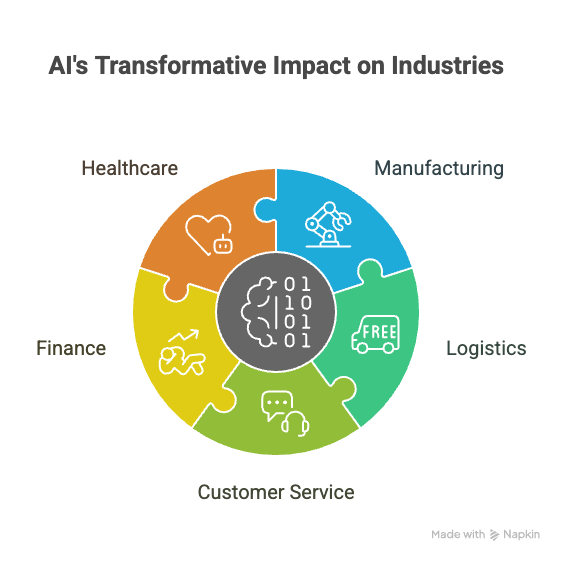
The convergence of these technologies is driving significant changes across various industries. From manufacturing and logistics to customer service and finance, AI and automation are streamlining processes, improving efficiency, and enhancing productivity.
Impact on Industries
The impact of AI and automation varies across different industries, but some common trends are emerging:
- Manufacturing: Automation has long been a staple in manufacturing, but AI is taking it to the next level. AI-powered robots can perform complex tasks with greater precision and speed, while predictive maintenance systems can identify potential equipment failures before they occur, minimizing downtime.
- Logistics: AI is optimizing supply chains, improving delivery routes, and automating warehouse operations. Self-driving vehicles and drones are also poised to revolutionize the transportation of goods.
- Customer Service: Chatbots and virtual assistants are becoming increasingly sophisticated, handling a wide range of customer inquiries and providing personalized support. This frees up human agents to focus on more complex issues.
- Finance: AI is being used for fraud detection, risk management, and algorithmic trading. It can also automate tasks such as data entry and reconciliation, improving efficiency and accuracy.
- Healthcare: AI is assisting doctors with diagnosis, treatment planning, and drug discovery. Robotic surgery is becoming more common, and AI-powered tools are helping to personalize patient care.
Changing Job Roles
As AI and automation take over routine and repetitive tasks, job roles are evolving. Some jobs may be eliminated, while others will be transformed. New jobs will also be created, requiring different skills and expertise.
- Automation of Routine Tasks: Jobs that involve repetitive tasks, such as data entry, assembly line work, and basic customer service, are most susceptible to automation.
- Augmentation of Human Capabilities: AI can augment human capabilities by providing insights, automating tasks, and freeing up time for more strategic work. For example, AI-powered tools can help marketers analyze data and identify trends, allowing them to create more effective campaigns.
- Creation of New Jobs: The rise of AI and automation will also create new jobs in areas such as AI development, data science, and robotics. These jobs will require specialized skills and knowledge.
Skills for the Future
To thrive in the age of AI and automation, workers will need to develop new skills and adapt to changing job roles. Some of the most important skills for the future include:
- Critical Thinking: The ability to analyze information, evaluate arguments, and make sound judgments.
- Problem-Solving: The ability to identify and solve complex problems.
- Creativity: The ability to generate new ideas and solutions.
- Emotional Intelligence: The ability to understand and manage emotions, and to build relationships with others.
- Technical Skills: Proficiency in areas such as data analysis, programming, and AI.
- Adaptability: The ability to learn new skills and adapt to changing circumstances.
Strategies for Businesses
Businesses need to proactively adapt to the changing landscape of work to remain competitive. Here are some strategies for success:
- Invest in AI and Automation: Identify opportunities to automate tasks, improve efficiency, and enhance productivity.
- Upskill and Reskill Employees: Provide training and development opportunities to help employees acquire the skills they need to thrive in the age of AI.
- Foster a Culture of Innovation: Encourage employees to experiment with new technologies and develop innovative solutions.
- Embrace Collaboration: Foster collaboration between humans and machines to leverage the strengths of both.
- Focus on Customer Experience: Use AI to personalize customer interactions and improve the overall customer experience.
- Address Ethical Considerations: Ensure that AI is used responsibly and ethically, and that it does not perpetuate bias or discrimination.
- Plan for Workforce Transition: Anticipate the impact of AI on the workforce and develop strategies to manage the transition, such as providing retraining opportunities or offering early retirement packages.
Challenges and Considerations
While AI and automation offer many benefits, they also present challenges that businesses need to address:
- Job Displacement: The automation of tasks may lead to job displacement, requiring businesses to provide retraining or find alternative employment for affected workers.
- Skills Gap: There is a growing skills gap between the skills that employers need and the skills that workers possess. Businesses need to invest in training and development to bridge this gap.
- Ethical Concerns: AI can perpetuate bias and discrimination if it is not used responsibly. Businesses need to ensure that AI systems are fair and unbiased.
- Data Privacy and Security: AI systems rely on large amounts of data, which raises concerns about data privacy and security. Businesses need to implement robust security measures to protect sensitive data.
- Implementation Costs: Implementing AI and automation can be expensive, requiring significant investments in technology and infrastructure.
Conclusion
AI and automation are transforming the future of work, creating new opportunities and challenges for businesses and workers alike. By embracing these technologies, investing in skills development, and addressing ethical considerations, businesses can leverage AI and automation to improve efficiency, enhance productivity, and create a more innovative and competitive workforce. The key is to approach these changes proactively and strategically, ensuring that the benefits of AI and automation are shared broadly and that the workforce is prepared for the future.