
Background
This blog explores the burgeoning role of Artificial Intelligence (AI) within the hospitality industry. It examines current applications of AI, including chatbots, personalized recommendations, operational efficiency improvements, and enhanced security measures. Furthermore, it discusses the potential future impact of AI on the industry, addressing both the opportunities and challenges that come with its increasing adoption.
Current Applications of AI in Hospitality
AI is rapidly transforming the hospitality landscape, offering innovative solutions to enhance guest experiences and streamline operations. Here are some key areas where AI is currently making a significant impact:
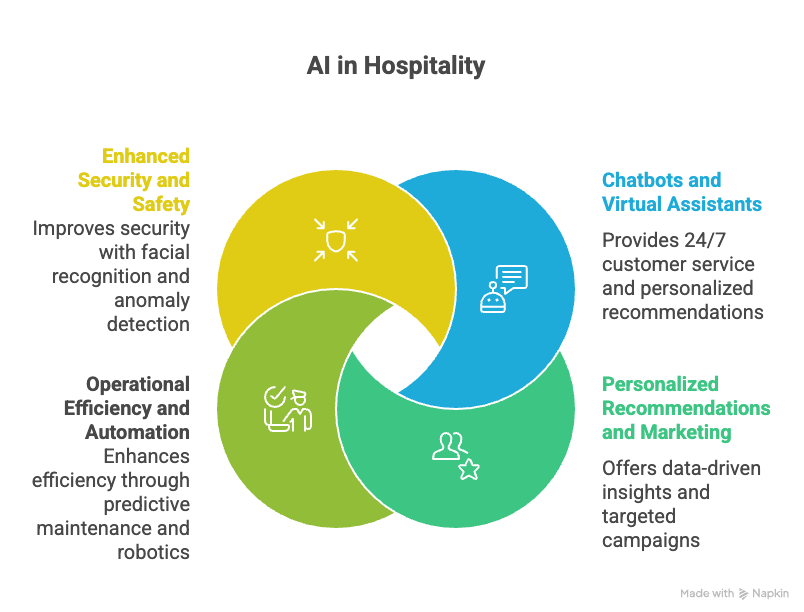
1. Chatbots and Virtual Assistants
- 24/7 Customer Service: AI-powered chatbots provide instant responses to guest inquiries, resolving common issues like booking confirmations, directions, and amenity requests, even outside of regular business hours. This ensures continuous support and improves customer satisfaction.
- Personalized Recommendations: Chatbots can analyze guest preferences and past behavior to offer tailored recommendations for restaurants, activities, and hotel services, enhancing the overall guest experience.
- Multilingual Support: AI chatbots can communicate in multiple languages, catering to a diverse clientele and breaking down language barriers.
- Example: A hotel chatbot can answer questions about pool hours, restaurant menus, and local attractions, all while providing personalized recommendations based on the guest’s profile.
2. Personalized Recommendations and Marketing
- Data-Driven Insights: AI algorithms analyze vast amounts of guest data, including booking history, preferences, and online behavior, to identify patterns and trends.
- Targeted Marketing Campaigns: Based on these insights, hotels can create highly targeted marketing campaigns, offering personalized promotions and packages that resonate with individual guests.
- Dynamic Pricing: AI algorithms can dynamically adjust room rates based on demand, seasonality, and competitor pricing, maximizing revenue and occupancy rates.
- Example: An AI system might identify that a guest frequently books spa treatments and offer them a discounted spa package during their next stay.
3. Operational Efficiency and Automation
- Predictive Maintenance: AI can analyze sensor data from equipment to predict potential maintenance issues, allowing hotels to proactively address problems before they lead to costly downtime.
- Automated Check-in/Check-out: AI-powered kiosks and mobile apps enable guests to check in and check out quickly and efficiently, reducing wait times and freeing up staff to focus on other tasks.
- Robotics in Housekeeping and Room Service: Robots are increasingly being used for tasks such as vacuuming, delivering amenities, and even preparing simple meals, improving efficiency and reducing labor costs.
- Inventory Management: AI can optimize inventory levels for supplies and amenities, minimizing waste and ensuring that hotels always have the right products on hand.
- Example: An AI-powered system can monitor energy consumption and automatically adjust lighting and temperature settings to optimize energy efficiency and reduce utility costs.
4. Enhanced Security and Safety
- Facial Recognition: AI-powered facial recognition systems can be used to verify guest identities, prevent unauthorized access to rooms and facilities, and enhance overall security.
- Anomaly Detection: AI algorithms can analyze security footage and sensor data to detect unusual activity, such as suspicious behavior or unauthorized entry, alerting security personnel to potential threats.
- Predictive Policing: AI can analyze crime data to predict potential hotspots and allocate security resources accordingly, improving safety for guests and staff.
- Example: An AI system can analyze security camera footage to identify individuals who have been flagged as potential security risks, alerting security personnel to their presence.
Future Impact of AI on Hospitality
The future of AI in hospitality is bright, with the potential to revolutionize every aspect of the industry. Here are some potential future applications:
1. Hyper-Personalization
- AI-Powered Concierges: Virtual concierges will anticipate guest needs and preferences, providing proactive recommendations and personalized services throughout their stay.
- Customized Room Environments: AI will allow guests to customize their room environment, including lighting, temperature, and entertainment options, to their exact preferences.
- Predictive Service: AI will anticipate guest needs before they even arise, providing proactive service and creating a truly seamless and personalized experience.
2. Enhanced Automation
- Fully Automated Hotels: While not yet mainstream, the concept of fully automated hotels, with minimal human staff, is becoming increasingly feasible with advancements in AI and robotics.
- Smart Room Technology: AI-powered smart room technology will automate tasks such as ordering room service, controlling appliances, and adjusting lighting, creating a more convenient and comfortable experience for guests.
- AI-Driven Revenue Management: AI will optimize pricing and inventory management in real-time, maximizing revenue and profitability.
3. Immersive Experiences
- Virtual and Augmented Reality: AI will be used to create immersive virtual and augmented reality experiences, allowing guests to explore destinations, preview hotel amenities, and even interact with historical figures.
- AI-Generated Art and Entertainment: AI will be used to create personalized art and entertainment experiences, tailoring content to individual guest preferences.
Challenges and Considerations
While the potential benefits of AI in hospitality are significant, there are also several challenges and considerations that need to be addressed:
- Data Privacy and Security: Protecting guest data is paramount. Hotels must implement robust security measures and comply with data privacy regulations to ensure that guest information is protected.
- Job Displacement: The automation of certain tasks may lead to job displacement for some hospitality workers. Hotels need to invest in training and development programs to help employees adapt to new roles and responsibilities.
- Cost of Implementation: Implementing AI solutions can be expensive, particularly for smaller hotels. Hotels need to carefully evaluate the costs and benefits of AI adoption before making significant investments.
- Maintaining the Human Touch: While AI can enhance efficiency and personalization, it is important to maintain the human touch in hospitality. Guests still value personal interactions and genuine hospitality.
- Ethical Considerations: As AI becomes more sophisticated, it is important to consider the ethical implications of its use. Hotels need to ensure that AI is used in a fair and transparent manner, and that it does not discriminate against any group of guests.
Conclusion
AI is poised to revolutionize the hospitality industry, offering unprecedented opportunities to enhance guest experiences, streamline operations, and improve profitability. By embracing AI and addressing the associated challenges, hotels can create a more personalized, efficient, and secure environment for their guests, while also driving innovation and growth. The key lies in finding the right balance between leveraging AI’s capabilities and preserving the human element that is so essential to the hospitality experience.