Background
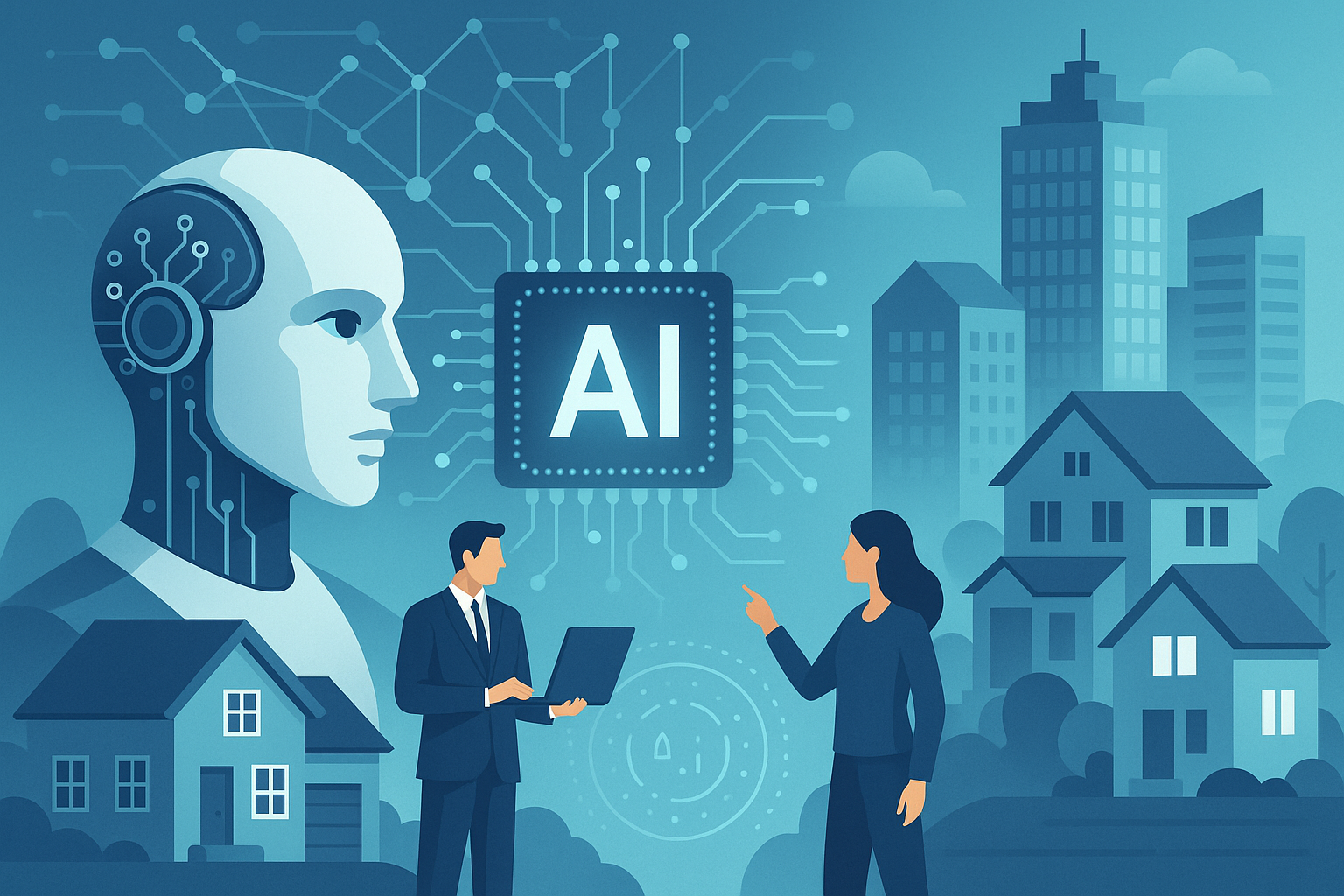
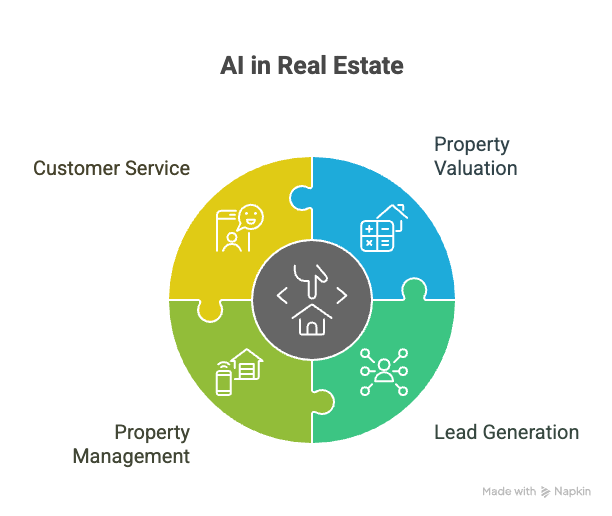
This blog explores the transformative potential of Artificial Intelligence (AI) in enhancing efficiency across various aspects of the real estate industry. It examines specific applications of AI, including property valuation, lead generation, property management, and customer service, highlighting the benefits and challenges associated with their implementation. The blog also discusses the future trends and implications of AI in shaping the real estate landscape.
Property Valuation
Traditional property valuation methods often rely on manual data collection, subjective assessments, and historical sales comparisons. This process can be time-consuming, prone to errors, and may not accurately reflect current market conditions. AI-powered valuation models offer a more efficient and data-driven approach.
How AI Improves Property Valuation:
- Automated Data Collection: AI algorithms can automatically gather data from various sources, including online listings, public records, social media, and economic indicators. This eliminates the need for manual data entry and ensures a comprehensive dataset.
- Advanced Analytics: AI can analyze vast amounts of data to identify patterns, trends, and correlations that may not be apparent to human analysts. This enables more accurate predictions of property values.
- Personalized Valuation: AI models can consider individual property characteristics, such as location, size, condition, and amenities, to provide personalized valuations that reflect the unique features of each property.
- Real-Time Updates: AI algorithms can continuously monitor market conditions and update property valuations in real-time, providing investors and homeowners with the most current information.
Benefits
- Increased accuracy and reliability of property valuations.
- Reduced time and cost associated with traditional valuation methods.
- Improved decision-making for buyers, sellers, and investors.
- Enhanced transparency and objectivity in the valuation process.
Lead Generation
Generating high-quality leads is crucial for real estate agents and brokers. AI can significantly improve lead generation efforts by identifying potential clients and tailoring marketing messages to their specific needs.
How AI Improves Lead Generation:
- Predictive Analytics: AI algorithms can analyze customer data to identify individuals who are most likely to be interested in buying or selling a property.
- Targeted Marketing: AI can personalize marketing messages based on customer preferences, demographics, and online behavior, increasing the effectiveness of marketing campaigns.
- Social Media Monitoring: AI can monitor social media conversations to identify individuals who are expressing interest in real estate or discussing related topics.
Benefits
- Increased lead generation efficiency and effectiveness.
- Improved targeting of marketing efforts.
- Enhanced customer engagement and satisfaction.
- Reduced marketing costs.
Property Management
Managing properties can be a complex and time-consuming task. AI can automate many aspects of property management, freeing up property managers to focus on more strategic initiatives.
How AI Improves Property Management:
- Automated Maintenance Scheduling: AI can analyze maintenance requests and schedule repairs automatically, optimizing resource allocation and reducing downtime.
- Smart Home Integration: AI can integrate with smart home devices to monitor energy consumption, detect leaks, and prevent potential problems.
- Tenant Screening: AI can automate the tenant screening process, analyzing credit scores, criminal records, and other relevant data to identify qualified tenants.
- Rent Collection: AI can automate rent collection and payment reminders, reducing late payments and improving cash flow.
Benefits
- Reduced operational costs and improved efficiency.
- Enhanced tenant satisfaction and retention.
- Improved property maintenance and upkeep.
- Increased profitability.
Customer Service
Providing excellent customer service is essential for building strong relationships with clients and maintaining a positive reputation. AI-powered chatbots and virtual assistants can provide instant and personalized support to customers, improving their overall experience.
How AI Improves Customer Service:
- 24/7 Availability: AI-powered chatbots can provide instant support to customers 24 hours a day, 7 days a week, ensuring that their questions are answered promptly.
- Personalized Responses: AI can analyze customer data to provide personalized responses that address their specific needs and concerns.
- Multilingual Support: AI can provide support in multiple languages, expanding the reach of customer service efforts.
- Automated Issue Resolution: AI can resolve common customer issues automatically, freeing up human agents to focus on more complex problems.
Benefits
- Improved customer satisfaction and loyalty.
- Reduced customer service costs.
- Increased efficiency of customer service operations.
- Enhanced brand reputation.
Challenges and Considerations
While AI offers significant benefits for the real estate industry, there are also several challenges and considerations that need to be addressed.
- Data Privacy and Security: AI algorithms rely on large amounts of data, which raises concerns about data privacy and security. It is important to implement robust security measures to protect sensitive data from unauthorized access.
- Bias and Fairness: AI algorithms can be biased if they are trained on biased data. This can lead to unfair or discriminatory outcomes. It is important to ensure that AI algorithms are trained on diverse and representative datasets.
- Job Displacement: The automation of tasks through AI may lead to job displacement in some areas of the real estate industry. It is important to provide training and support to workers who may be affected by these changes.
- Ethical Considerations: The use of AI in real estate raises ethical considerations, such as the potential for algorithmic discrimination and the impact on human decision-making. It is important to develop ethical guidelines for the use of AI in the industry.
Future Trends
The future of AI in real estate is promising, with several emerging trends expected to shape the industry in the coming years.
- Increased Adoption of AI-Powered Platforms: More real estate companies will adopt AI-powered platforms to streamline their operations and improve efficiency.
- Development of More Sophisticated AI Algorithms: AI algorithms will become more sophisticated, enabling them to perform more complex tasks and provide more accurate insights.
- Integration of AI with Other Technologies: AI will be integrated with other technologies, such as blockchain and virtual reality, to create new and innovative solutions for the real estate industry.
- Focus on Explainable AI (XAI): There will be a growing focus on explainable AI, which aims to make AI algorithms more transparent and understandable.
Conclusion
AI has the potential to revolutionize the real estate industry by enhancing efficiency, improving decision-making, and providing better customer service. While there are challenges and considerations that need to be addressed, the benefits of AI are undeniable. As AI technology continues to evolve, it is likely to play an increasingly important role in shaping the future of the real estate landscape. By embracing AI and addressing the associated challenges, real estate professionals can unlock new opportunities and create a more efficient, transparent, and customer-centric industry.