Background
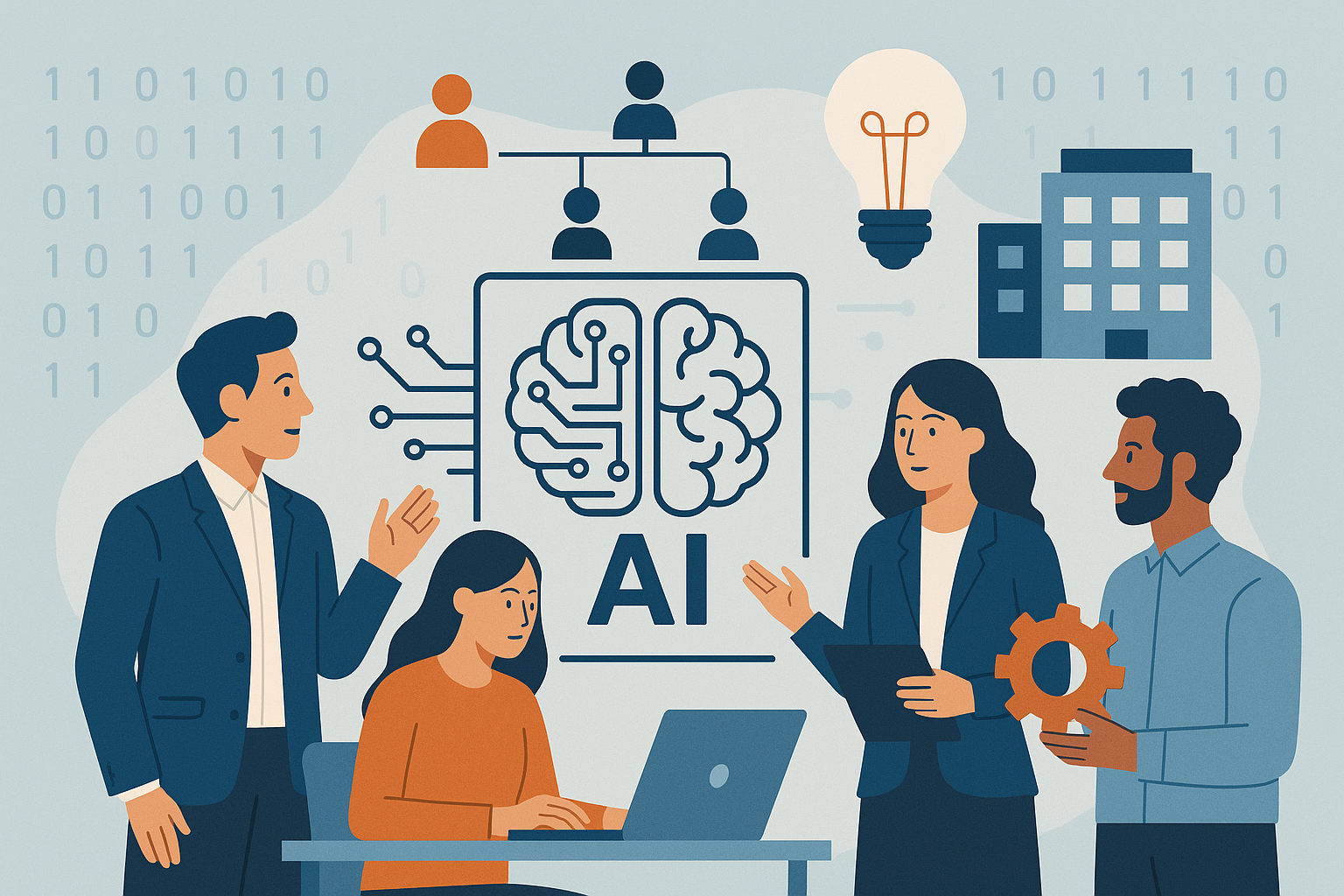
This blog outlines the key steps and considerations for building an AI-centric culture within an organization. It emphasizes the importance of leadership buy-in, talent development, data accessibility, ethical considerations, and continuous learning to foster an environment where AI is embraced and effectively utilized to drive innovation and achieve strategic goals.
1. Leadership Commitment and Vision
The foundation of an AI-centric culture lies in strong leadership commitment. Leaders must champion the adoption of AI, articulate a clear vision for its role in the organization’s future, and actively promote its use across all departments.
- Articulate a Clear Vision: Define how AI will transform the organization, improve processes, and create new opportunities. This vision should be communicated clearly and consistently to all employees.
- Secure Executive Buy-in: Obtain support from senior management to allocate resources, prioritize AI initiatives, and drive cultural change.
- Lead by Example: Leaders should actively participate in AI-related activities, such as attending training sessions, sponsoring AI projects, and advocating for AI adoption.
- Establish AI Governance: Create a governance structure to oversee AI initiatives, ensure alignment with organizational goals, and address ethical and regulatory considerations.
2. Talent Acquisition and Development
Building an AI-centric culture requires a skilled workforce capable of developing, deploying, and managing AI solutions. Organizations must invest in talent acquisition and development to build the necessary expertise.
- Identify Skill Gaps: Assess the current skills of the workforce and identify gaps in AI-related areas, such as data science, machine learning, and AI engineering.
- Recruit AI Talent: Attract and hire skilled AI professionals through targeted recruitment efforts, partnerships with universities, and participation in industry events.
- Develop Internal Talent: Provide training and development opportunities for existing employees to acquire AI skills. This can include online courses, workshops, mentorship programs, and on-the-job training.
- Foster a Learning Culture: Encourage employees to continuously learn and experiment with AI technologies. Provide access to learning resources, support participation in conferences and workshops, and create opportunities for knowledge sharing.
- Cross-Functional Collaboration: Encourage collaboration between AI experts and domain experts to ensure that AI solutions are aligned with business needs and effectively address real-world problems.
3. Data Accessibility and Quality
Data is the fuel that powers AI. Organizations must ensure that data is accessible, high-quality, and properly managed to support AI initiatives.
- Establish a Data Strategy: Develop a comprehensive data strategy that outlines how data will be collected, stored, managed, and used for AI purposes.
- Improve Data Quality: Implement data quality processes to ensure that data is accurate, complete, and consistent. This may involve data cleansing, validation, and standardization.
- Ensure Data Accessibility: Make data easily accessible to AI developers and data scientists while adhering to data privacy and security regulations. This may involve creating data lakes, data warehouses, or data APIs.
- Promote Data Literacy: Educate employees about the importance of data quality and data governance. Encourage them to use data responsibly and ethically.
- Invest in Data Infrastructure: Invest in the necessary infrastructure to support data storage, processing, and analysis. This may include cloud computing, big data platforms, and AI development tools.
4. Experimentation and Innovation
An AI-centric culture encourages experimentation and innovation. Organizations should create an environment where employees feel empowered to explore new AI applications and test new ideas.
- Create a Sandbox Environment: Provide a sandbox environment where employees can experiment with AI technologies without disrupting production systems.
- Encourage Innovation: Encourage employees to submit ideas for AI applications and provide resources to support their development.
- Run Pilot Projects: Launch pilot projects to test the feasibility and effectiveness of AI solutions.
- Celebrate Successes: Recognize and reward employees who contribute to successful AI projects.
- Learn from Failures: View failures as learning opportunities and use them to improve future AI initiatives.
5. Ethical Considerations and Responsible AI
AI raises important ethical considerations. Organizations must ensure that AI is used responsibly and ethically, and that its impact on society is carefully considered.
- Establish Ethical Guidelines: Develop ethical guidelines for the development and deployment of AI solutions. These guidelines should address issues such as bias, fairness, transparency, and accountability.
- Promote Transparency: Ensure that AI systems are transparent and explainable. Explain how AI decisions are made and provide users with the ability to understand and challenge those decisions.
- Address Bias: Identify and mitigate bias in AI systems. Use diverse datasets and algorithms to ensure that AI solutions are fair and equitable.
- Ensure Accountability: Establish clear lines of accountability for AI decisions. Assign responsibility for the ethical and responsible use of AI.
- Monitor and Evaluate: Continuously monitor and evaluate the impact of AI systems on society. Be prepared to make adjustments as needed to ensure that AI is used for good.
6. Communication and Collaboration
Effective communication and collaboration are essential for building an AI-centric culture. Organizations must create channels for sharing information, exchanging ideas, and collaborating on AI projects.
- Establish Communication Channels: Create communication channels for sharing information about AI initiatives, best practices, and lessons learned. This may include newsletters, blogs, forums, and social media groups.
- Promote Collaboration: Encourage collaboration between different departments and teams on AI projects. This can help to break down silos and foster a shared understanding of AI.
- Share Success Stories: Share success stories about AI applications to inspire and motivate employees.
- Provide Training and Education: Provide training and education to employees about AI technologies and their potential applications.
- Seek External Expertise: Engage with external experts, such as consultants, researchers, and vendors, to gain access to specialized knowledge and resources.
7. Continuous Improvement and Measurement
Building an AI-centric culture is an ongoing process. Organizations must continuously monitor their progress, measure their results, and make adjustments as needed.
- Establish Metrics: Define metrics to measure the success of AI initiatives. These metrics should be aligned with organizational goals and objectives.
- Track Progress: Track progress against these metrics and identify areas for improvement.
- Gather Feedback: Gather feedback from employees, customers, and other stakeholders about their experiences with AI.
- Analyze Results: Analyze the results of AI initiatives to identify what is working well and what needs to be improved.
- Make Adjustments: Make adjustments to AI strategies and initiatives based on the results of the analysis.
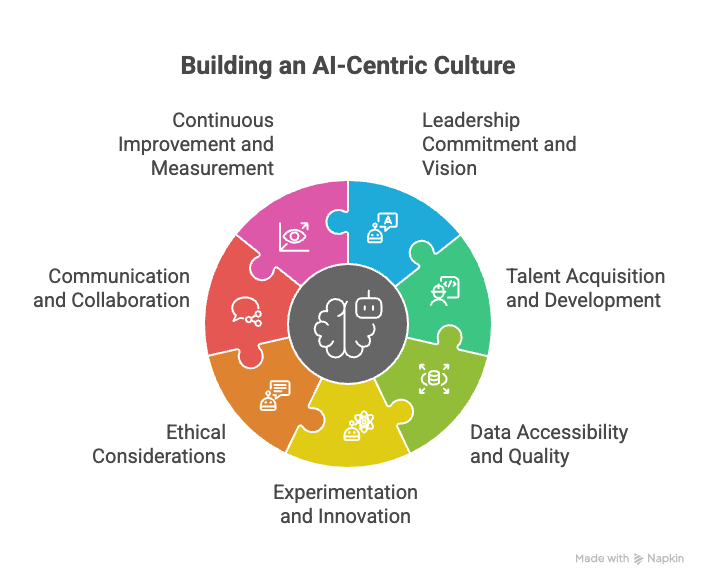
By following these steps, organizations can build an AI-centric culture that fosters innovation, drives efficiency, and creates new opportunities for growth. The key is to embrace AI as a strategic imperative, invest in talent and infrastructure, and promote a culture of experimentation, learning, and ethical responsibility.