Background
AI4U is a proprietary, AI-powered sales assistant developed in-house at CognitiveWorks, specifically designed to enhance lead generation and streamline customer engagement processes.
In this blog post, we will provide a comprehensive overview of the conceptual foundation and design methodology behind AI4U. This includes an in-depth look at its cognitive framework, the principles of design thinking that shaped its development, the structure and intent of its system prompt, and a detailed walkthrough of its implementation architecture. Our aim is to shed light on how AI4U effectively mimics expert-level sales interactions and supports sales teams in achieving higher conversion rates with greater efficiency.
Introduction
As an AI consulting firm operating at the forefront of innovation, we recognize the need to think several steps ahead of traditional business practices. When exploring strategies for global outreach, our initial approach involved conducting a direct engagement campaign to initiate conversations with international businesses about their AI requirements. However, we paused to critically evaluate the practicality and scalability of this approach.
We asked ourselves key strategic questions: Would time zone differences create bottlenecks in communication? Could we introduce AI-driven automation to overcome these logistical challenges while maintaining a high level of personalization?
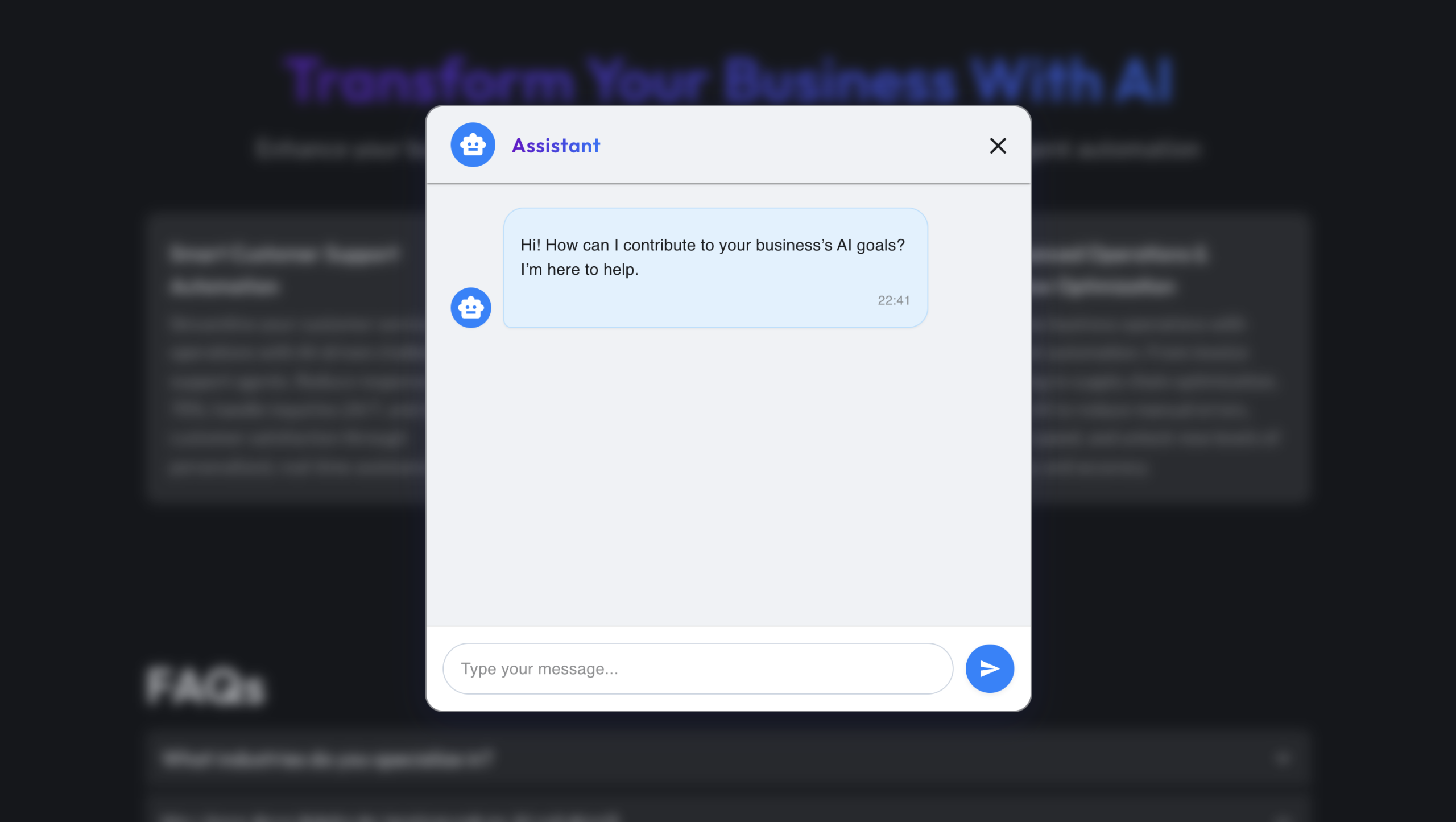
This reflection led to the conceptualization of AI4U, an intelligent chatbot equipped with agentic capabilities. Designed to serve as the first point of contact for potential leads, AI4U engages in meaningful, context-aware conversations, probing into specific business needs—such as team composition, operational challenges, and AI adoption readiness. Upon completing the interaction, the chatbot autonomously compiles a structured lead generation report, summarizes the key insights, and delivers it in PDF format directly to our sales department. This not only streamlines the lead qualification process but also ensures that our outreach efforts remain efficient, scalable, and deeply aligned with the unique needs of each prospect.
Concept & Initial Thoughts
At the inception of AI4U, one of our primary considerations was to design a user interface that could intuitively introduce our value proposition while encouraging user engagement from the very first interaction. We began by conceptualizing a minimalist microsite that would serve as the digital entry point for prospects—a space where design clarity meets strategic communication.
The structure of the microsite was thoughtfully crafted to guide the visitor through a seamless narrative. At the top, we placed a compelling headline paired with a concise yet impactful subtitle, aimed at immediately capturing attention and conveying our core mission. This was followed by a triad of service cards, each articulating one of our key offerings. These cards were not merely descriptive but purposefully curated to give visitors a quick, digestible overview of how our AI consulting solutions can address real business challenges.
However, the most pivotal element of the microsite was the Call-To-Action (CTA). Rather than treating it as a standard website component, we positioned the CTA as the focal point of the user journey. Designed with high visual prominence and strategic copy, the CTA invited visitors to initiate a conversation with AI4U. By doing so, users transitioned from passive observers to active participants—directly engaging with our intelligent chatbot to explore personalized solutions tailored to their business context.
This approach not only enhanced user experience but also reinforced AI4U’s role as a proactive, conversational interface that begins delivering value from the very first click.
Prompt Engineering – The Backbone
Following the initial conceptualization of the user experience, our focus shifted to one of the most critical components of AI4U—its system prompt. The objective was clear, to enable the chatbot to facilitate immersive, human-like conversations that mimic the flow and depth of a seasoned sales representative.
Our first iteration leaned toward a minimalist approach. The idea was to let the user initiate the interaction, with the chatbot responding to queries in a reactive, support-style manner. While this structure aligned with conventional chatbot paradigms, it soon became evident that it was insufficient for the nuanced role we envisioned for AI4U. Many prospective clients may not fully understand how AI solutions can address their specific challenges, nor would they always know what to ask to uncover the full spectrum of possibilities.
Recognizing this gap, we pivoted our design thinking. Rather than waiting for input, we restructured the system prompt to position AI4U as a proactive participant—an intelligent, agentic sales assistant capable of leading the conversation with contextual awareness and strategic inquiry. The prompt was engineered to initiate dialogue, ask probing questions about the user’s business environment, team structure, digital maturity, and operational pain points—effectively guiding the interaction with purpose and empathy.
To enhance the conversational quality, we embedded dynamic linguistic patterns into the assistant’s response model. This included transitional phrases like “Shifting gears a bit…” to keep the discussion natural and engaging. These subtle yet powerful elements ensured that the conversation flowed smoothly, avoided redundancy, and felt authentic—critical qualities in establishing trust during the lead qualification process.
Ultimately, this shift in prompt architecture transformed AI4U from a passive information provider into an intelligent, consultative interface—capable of drawing out meaningful insights while delivering an experience that feels less like a scripted exchange and more like a personalized business conversation.
Agentic Smartness
At the conclusion of each user interaction, our priority was to ensure that AI4U not only facilitated a meaningful dialogue but also captured actionable intelligence that could inform and accelerate our sales process. It was imperative that the insights gathered during the conversation didn’t remain confined within the chatbot, but were escalated efficiently to the appropriate stakeholders for timely follow-up.
To achieve this, we introduced an additional layer of intelligence in the form of a secondary system prompt. This prompt instructed AI4U to autonomously generate a structured PDF report summarizing the conversation. The format of the report was carefully designed to extract and present key business details—such as the client’s industry focus, AI readiness, team size, existing challenges, and areas of interest—in a manner that would be immediately useful to our sales leadership team.
This design choice activated AI4U’s agentic capabilities at a foundational level. Rather than functioning solely as a conversational interface, the assistant was now completing a full-cycle task: conducting the dialogue, extracting critical data, and compiling it into a formal lead generation report—entirely autonomously.
To further streamline the process, we integrated an SMTP email gateway, enabling AI4U to automatically dispatch the PDF report to our internal sales inbox. This eliminated manual handoffs and ensured that every qualified lead was promptly routed to the right team member for further engagement.
With this enhancement, we successfully implemented a lightweight yet effective agentic workflow within the chatbot’s architecture. The solution remained cost-efficient and operationally simple, while still demonstrating the potential of AI-driven automation in handling the early stages of client acquisition with professionalism and precision.
Final Notes
The development of AI4U has been more than a technical initiative—it has been a strategic exploration into how AI can elevate human-centric processes like sales and client engagement. Through iterative design, systems thinking, and a focus on user experience, we’ve built a solution that doesn’t just respond to input but understands context, anticipates needs, and delivers value proactively.
What sets AI4U apart is not only its conversational fluency or automation capabilities, but its alignment with real business workflows. By embedding intelligence directly into the engagement pipeline—from initial interaction to lead qualification and reporting—we’ve transformed what is traditionally a manual, time-consuming process into an elegant, automated system that scales with ease.
As we look ahead, AI4U serves as both a working solution and a foundation for future innovations. Plans are already underway to extend its capabilities with deeper CRM integration, sentiment tracking, and intelligent follow-ups powered by LLM-based memory systems. Our broader vision is to evolve AI4U into a fully autonomous sales co-pilot that complements human teams—not replaces them—amplifying efficiency, insight, and personalization at scale.
In a world where attention is scarce and expectations are high, AI4U exemplifies what’s possible when thoughtful design meets applied AI. For us at CognitiveWorks, it is a testament to how technology, when built with empathy and purpose, can create real impact—not just for business outcomes, but for the people behind them.